Py Xiaozhi MCP Server
 by huangjunsen0406
Open-source AI assistant ecosystem with MCP integrations, multimodal workflows, IoT support, and cross-platform voice interaction.
Py Xiaozhi is an open-source mcp server by huangjunsen0406, written mainly in Python, with 3,538 GitHub stars and the MIT license. Its code was last updated Oct 31, 2026.
py-xiaozhi
<p align="center" class="trendshift"> <a href="https://trendshift.io/repositories/14130" target="_blank"> <img src="https://trendshift.io/api/badge/repositories/14130" alt="Trendshift" style="width: 250px; height: 55px;" width="250" height="55"/> </a> </p> <p align="center"> <a href="https://github.com/huangjunsen0406/py-xiaozhi/releases/latest"> <img src="https://img.shields.io/github/v/release/huangjunsen0406/py-xiaozhi?style=flat-square&logo=github&color=blue" alt="Release"/> </a> <a href="https://opensource.org/licenses/MIT"> <img src="https://img.shields.io/badge/License-MIT-green.svg?style=flat-square" alt="License: MIT"/> </a> <a href="https://github.com/huangjunsen0406/py-xiaozhi/stargazers"> <img src="https://img.shields.io/github/stars/huangjunsen0406/py-xiaozhi?style=flat-square&logo=github" alt="Stars"/> </a> <a href="https://github.com/huangjunsen0406/py-xiaozhi/releases/latest"> <img src="https://img.shields.io/github/downloads/huangjunsen0406/py-xiaozhi/total?style=flat-square&logo=github&color=52c41a1&maxAge=86400" alt="Download"/> </a> <a href="https://gitee.com/huang-jun-sen/py-xiaozhi"> <img src="https://img.shields.io/badge/Gitee-FF5722?style=flat-square&logo=gitee" alt="Gitee"/> </a> <a href="https://huangjunsen0406.github.io/py-xiaozhi/guide/00_%E6%96%87%E6%A1%A3%E7%9B%AE%E5%BD%95.html"> <img alt="Usage Docs" src="https://img.shields.io/badge/Usage Docs-View-blue?labelColor=2d2d2d" /> </a> <a href="https://atomgit.com/huangjunsen0406/py-xiaozhi"> <img src="./assets/AtomGit.svg" alt="AtomGit" height="20"/> </a> </p>English | 简体中文
❤️ Sponsors
<details open> <summary>Click to collapse</summary>
Thanks to GitDo.net for sponsoring this project! GitDo.net is an AI API aggregation platform — one API Key for Claude, Gemini, GPT and other major models. Direct connection, no proxy needed, stable and efficient. An ideal choice for enterprise-grade AI programming. Visit GitDo.net
| Token能量站 | Thanks to Token能量站 (Factory.pub) for sponsoring this project! Providing API relay for GPT, Grok, Claude and other major models — stable, reliable, and affordable. Register here |
About
py-xiaozhi is a lightweight, cross-platform multi-modal AI interaction framework built on Python's async architecture. It supports real-time voice streaming, vision-language tasks, and IoT device control. Deployable across Windows, macOS, Linux desktops, and ARM embedded platforms (Raspberry Pi, Horizon Robotics RDK, Jetson Nano), it bridges the gap between Large Language Models and physical hardware — out of the box.
Evolved from the xiaozhi-esp32 firmware project. Officially adopted by D-Robotics (xiaozhi-in-rdk) as an upstream dependency.
Related Projects
- xiaozhi-desktop — Electron desktop client with AEC echo cancellation, Live2D, floating window modes, and Windows / macOS installers
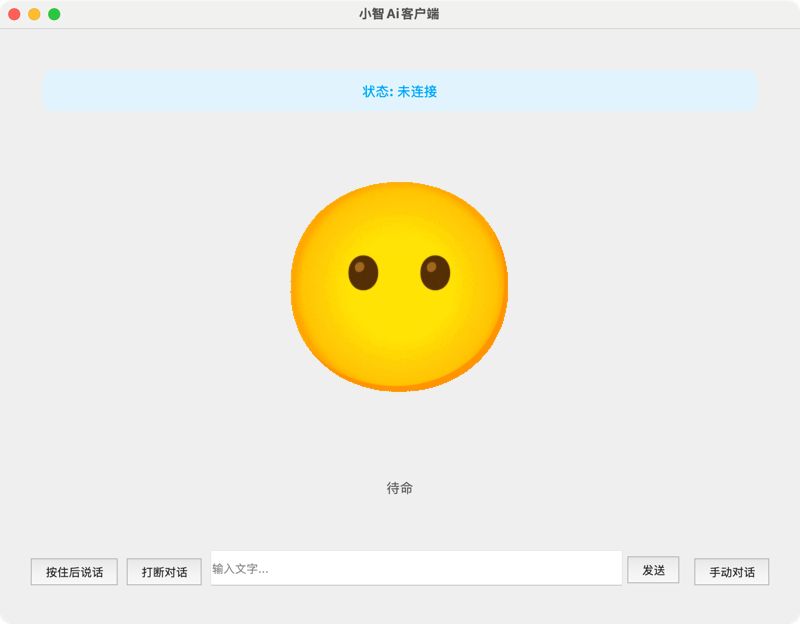
Demo
Key Features
- Real-time Voice AI — Opus codec with auto frame detection (RFC 6716 TOC parsing), async streaming, sub-20ms latency
- Multi-modal Vision — Camera capture + vision-language model integration for image understanding and scene perception
- MCP Tool Ecosystem — Modular JSON-RPC 2.0 tool server: music player, camera, screenshot, app management, weather, volume control
- Cross-platform Deployment — Windows 10+ / macOS 10.15+ / Linux (x86_64 & ARM), optimized for Raspberry Pi and edge boards
- Multiple UI Modes — PySide6 + QML GUI / TUI / GPIO, adapting to desktop, headless server, and embedded environments
- Offline Wake Word — Sherpa-ONNX based on-device keyword spotting with custom wake word support
- IoT & Embodied AI Ready — GPIO interface for robotics control, hardware actuation, and sensor integration
- WebSocket / MQTT — Dual protocol communication with WSS/TLS encrypted transmission and auto-reconnection
- Plugin Architecture — Event-driven async design, clean dependency injection, extensible plugin system
System Requirements
Basic Requirements
- Python Version: 3.10 - 3.12
- Operating System: Windows 10+, macOS 10.15+, Linux
- Audio Devices: Microphone and speaker devices
- Network Connection: Stable internet connection (for AI services and online features)
Recommended Configuration
- Memory: At least 4GB RAM (8GB+ recommended)
- Processor: Modern CPU with AVX instruction set support
- Storage: At least 2GB available disk space (for model files and cache)
- Audio: Audio devices supporting 16kHz sampling rate
Optional Feature Requirements
- Voice Wake-up: Requires downloading Sherpa-ONNX speech recognition models
- Camera Features: Requires camera device and OpenCV support
Read This First
- Carefully read 项目文档 for startup tutorials and file descriptions
- The main branch has the latest code; manually reinstall pip dependencies after each update to ensure you have new dependencies
Zero to Xiaozhi Client (Video Tutorial)
Technical Architecture
Core Architecture Design
- Event-Driven Architecture: Based on asyncio asynchronous event loop, supporting high-concurrency processing
- Layered Design: Clear separation of application layer, protocol layer, and UI layer
- Dependency Injection: Component lifecycle managed via bootstrap container
- Plugin System: Audio, UI, MCP tools and other components loaded via plugin system
Device States
StateManager owns IDLE, LISTENING, SPEAKING and NOTIFYING;
ConversationSession coordinates transitions. A successful wake/button action enters
LISTENING after the protocol connects and accepts the listen request. TTS moves the
device to SPEAKING; once local playback drains, the session resumes LISTENING or
returns to IDLE. Server notifications play in NOTIFYING while otherwise idle,
then return to IDLE. Connection establishment belongs to the protocol lifecycle,
not a separate device state.
Key Technical Components
- Audio Processing: Opus codec, real-time resampling
- Speech Recognition: Sherpa-ONNX offline models, wake word recognition
- Protocol Communication: WebSocket/MQTT dual protocol support, encrypted transmission, auto-reconnection
- Configuration System: Hierarchical configuration, dot notation access, dynamic updates
Performance Optimization
- Async First: Full system asynchronous architecture, avoiding blocking operations
- Memory Management: Smart caching, garbage collection
- Audio Optimization: 5ms low-latency processing, queue management, streaming transmission
- Concurrency Control: Task pool management, semaphore control, thread safety
Security Mechanisms
- Encrypted Communication: WSS/TLS encryption, certificate verification
- Device Authentication: Dual protocol activation, device fingerprint recognition
- Access Control: Tool permission management, API access control
- Error Isolation: Exception isolation, fault recovery, graceful degradation
Development Guide
Project Structure
py-xiaozhi/
├── main.py                     # Application entry point
├── src/
│   ├── activation/             # Device activation
│   ├── audio_codecs/           # Audio codecs
│   ├── audio_processing/       # Wake word detection
│   ├── bootstrap/              # Application bootstrap & dependency injection
│   ├── constants/              # Constants
│   ├── core/                   # Core infrastructure (event bus, state management, task management, etc.)
│   ├── logging/                # Logging subsystem
│   ├── mcp/                    # MCP tool system
│   │   ├── mcp_server.py       # MCP server
│   │   └── tools/              # Tool modules (music/camera/screenshot/app/weather/volume)
│   ├── plugins/                # Plugin system (audio, UI, MCP, wake word, shortcuts)
│   ├── protocols/              # Communication protocols (WebSocket/MQTT)
│   ├── ui/                     # User interface
│   │   ├── gui/                # PySide6 + QML graphical interface
│   │   ├── tui/                # Textual full-screen terminal interface
│   │   └── gpio/               # GPIO embedded interface
│   └── utils/                  # Utility functions
├── libs/                       # Third-party native libraries
│   ├── libopus/                # Opus audio codec library
│   └── webrtc_apm/             # WebRTC audio processing module
├── models/                     # Wake word models
├── assets/                     # Static resources
├── scripts/                    # Auxiliary scripts
├── documents/                  # VitePress documentation site
├── pyproject.toml              # Project configuration
└── build.json                  # Build configuration
Development Environment Setup
# Clone project
git clone https://github.com/huangjunsen0406/py-xiaozhi.git
cd py-xiaozhi

# Base install (GPIO mode on Linux)
uv sync                                    # Recommended (uv users)
# or: pip install -e .                    # pip users

# TUI mode (extra: Textual)
uv sync --extra tui
# or: pip install -e '.[tui]'

# GUI mode (extra: PySide6 + qasync)
uv sync --extra gui                        # Recommended (uv users)
# or: pip install -e '.[gui]'             # pip users

# Full development environment (GUI + TUI + test / packaging tools)
uv sync --extra gui --extra tui --group dev

# Code formatting
./format_code.sh

# Run program - GUI mode (default; requires gui extra)
python main.py

# Run program - TUI mode (requires tui extra)
python main.py --mode tui

# Specify communication protocol
python main.py --protocol websocket  # WebSocket (default)
python main.py --protocol mqtt       # MQTT protocol
Entry points and verification
Source checkouts, installed wheels and frozen builds share src.cli.main(argv=None).
Importing the launcher does not parse arguments, initialize configuration/logging,
or load Qt/audio. --help and invalid arguments exit before runtime initialization.
# Installed command (GUI still needs the gui extra)
xiaozhi --mode tui
# Equivalent module entry point
python -m src --mode tui

# Full regression suite, including Qt model tests without a display
uv run --extra gui --extra tui python -m pytest -q -W error::RuntimeWarning

# Build sdist, then build the wheel from that sdist
uvx --from build pyproject-build
# Install the wheel into a temporary venv outside the checkout and verify it
python scripts/check_wheel.py dist/*.whl
The wheel contains assets, wake-word models and the supplied native libraries under
src/_resources; source and PyInstaller layouts keep their existing resource paths.
FFmpeg is resolved from the system PATH for wheel installs. The wheel check installs
only platformdirs alongside the wheel to verify entry points and resources; it does
not exercise audio hardware, GUI rendering or the full runtime dependency set.
PRs and branch pushes run Python tests on 3.10/3.12 and installed-wheel checks on Linux, macOS and Windows. Lint gates critical syntax/undefined-name rules across the project and all configured rules for the new entry-point/verification code. Existing style warnings elsewhere remain a separate cleanup task.
Core Development Patterns
- Async First: Use
async/awaitsyntax, avoid blocking operations - Error Handling: Complete exception handling and logging
- Configuration Management: Use
ConfigManagerfor unified configuration access - Test-Driven: Write unit tests to ensure code quality
Extension Development
- Add MCP Tools: Create new tool modules in
src/mcp/tools/directory - Add Protocols: Implement
Protocolabstract base class - Add Plugins: Extend the plugin system via
src/plugins/
State Transition Diagram
IDLE -- wake/button + protocol ready --> LISTENING
LISTENING -- TTS starts --> SPEAKING
SPEAKING -- playback drained --> LISTENING (continue) / IDLE (finish)
IDLE -- server notification --> NOTIFYING -- playback drained --> IDLE
Contributing
- Start with CONTRIBUTING.md for the repository workflow
- Chinese version: CONTRIBUTING_ZH.md
- Detailed docs: Contribution Guide
Maintainer Workflow
- Triage incoming work as
bug,feature,docs,refactor, ormaintenance - Prefer focused pull requests with clear validation steps and linked context
- Require docs updates when behavior, configuration, or public APIs change
- Merge after CI passes and review feedback is resolved
- Release through the normal release flow; merge does not imply immediate shipping
Community and Support
Thanks to the Following Open Source Contributors
In no particular order
Xiaoxia zhh827 SmartArduino-Li Honggang HonestQiao vonweller Sun Weigong isamu2025 Rain120 kejily Radio bilibili Jun Cyber Intelligence
Project Statistics
License
Py Xiaozhi alternatives
View more →Similar mcp servers in Smart Home & IoT, ranked by GitHub stars. Compare licence, recent activity and scan status before you choose.
| Name | Stars | Licence | Last updated | Scan |
|---|---|---|---|---|
| Py Xiaozhi (this page) huangjunsen0406 | 3.5k | MIT | Oct 31, 2026 | Scanned, no flagged issues |
| Xiaozhi Esp32 Server xinnan-tech | 11k | MIT | Nov 1, 2026 | Scanned, no flagged issues |
| Esp32 Nat Router martin-ger | 2.2k | None found | Oct 21, 2026 | Not scanned yet |
| Arduino Mcp2515 autowp | 1k | MIT | Feb 27, 2026 | Scanned, no flagged issues |
| Home Assistant Vibecode Agent Coolver | 651 | MIT | Oct 21, 2026 | Scanned, no flagged issues |
| Bagel Extelligence-ai | 400 | Apache-2.0 | Oct 19, 2026 | Scanned, no flagged issues |